
Pedicure for Dry Feet: What Can It Help With?
A pedicure for dry feet can leave rough, flaky skin feeling softer and more comfortable. A gentle soak, careful exfoliation and a rich moisturising massage remove some dry surface skin and add hydration. Results depend on your skin and home care, and painful, bleeding or very deep cracks should be checked by a doctor first.
Dry feet are common in Karachi, where heat, dust, open sandals and long hours on hard floors all take a toll on heels and soles. This guide explains what a pedicure can and cannot do for dry feet, what to expect at the studio, how to keep the softness going at home, and when to see a doctor instead.
What Can a Pedicure for Dry Feet Help With?
A pedicure is a comfort and grooming service, not a medical treatment. For everyday dryness, it can help in a few practical ways:
- Softer-feeling skin: a warm soak softens the outer layer so dry, flaky skin can be gently buffed away.
- Smoother-looking heels: careful filing of rough areas can make heels feel less rough to the touch.
- Added moisture: a massage with a rich cream or lotion leaves skin feeling hydrated and comfortable.
- Tidier nails and cuticles: nails are trimmed and shaped and cuticles are tidied, so feet look cared for overall.
- A moment to relax: the massage and quiet time are part of why many people book.
What a pedicure cannot do is cure a skin condition or guarantee that dryness will not return. Skin keeps renewing itself, and how long the softness lasts depends on weather, footwear, how much you walk and your routine at home.
What Happens During a Pedicure When Your Feet Are Dry?
The steps are similar to a classic pedicure, with extra attention on softening and moisturising. If you would like the full sequence, our guide to what happens during a pedicure, step by step explains each stage.
Soak and soften
Your feet rest in warm water for a few minutes. This softens dry skin and makes the next steps gentler. Very long, hot soaks can dry skin further, so a short soak is usually better for dry feet.
Gentle exfoliation
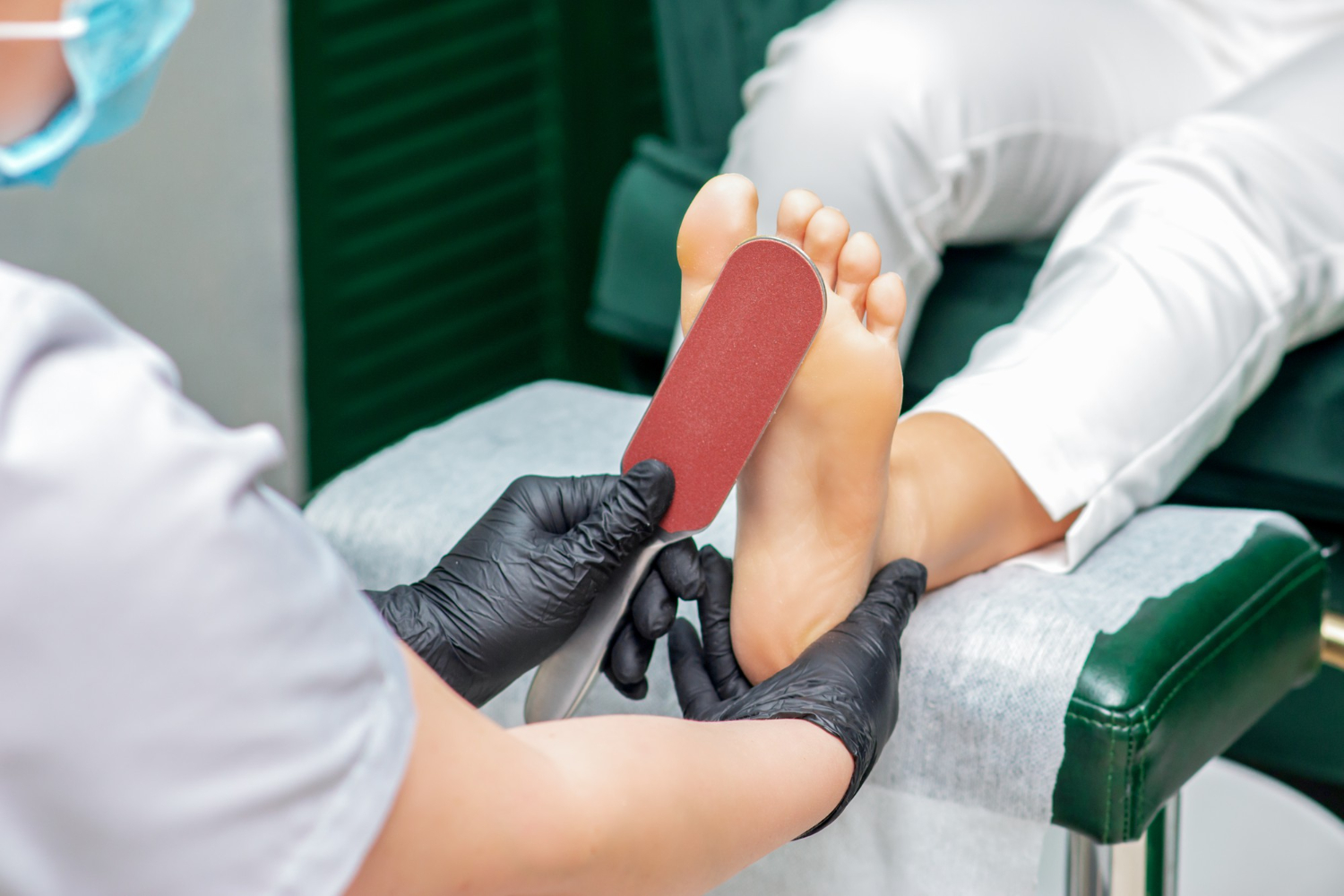
Your technician uses a foot file or scrub to buff away loose, dry skin on the heels and the balls of the feet. The aim is smoother, not raw: removing too much skin can leave feet sore and can make dryness worse afterwards.
Nail and cuticle care
Toenails are trimmed straight across and shaped, and cuticles are gently tidied. At My Cure Centre, the instruments used are sterile.
Moisturising massage
A rich cream is massaged into the feet and lower legs. Let your technician know if you prefer an unscented product or have any allergies.
Finish
You can choose polish or leave nails bare. If your heels are very dry, wearing soft socks for a while after your visit can help the moisturiser stay on the skin.
Who Is This Kind of Pedicure Suitable For?
For most adults with ordinary dryness or rough heels, a pedicure is a comfortable option. It is worth pausing and speaking to a doctor or podiatrist first if any of these apply:
- Cracks in the heel that are painful, deep or bleeding.
- Redness, swelling, warmth or discharge on the feet.
- Diabetes or circulation problems, where foot care should follow medical advice.
- A known skin condition on the feet, such as eczema or psoriasis.
- Thick, discoloured or crumbling nails that you have not had checked.
Our team will not diagnose foot, skin or nail conditions. If something looks unusual, your technician may suggest you have it checked before continuing.
How Can You Keep Feet Soft Between Pedicures?
Home care makes the biggest difference to how long your feet stay comfortable. The American Academy of Dermatology (AAD, public skin care guidance) suggests a few simple habits for dry heels, which also suit everyday dry feet:
- Keep baths and foot soaks short and use lukewarm rather than hot water.
- Use a gentle, fragrance-free cleanser so the skin keeps more of its natural oils.
- Moisturise straight after washing while skin is still slightly damp, and again before bed.
- Choose a thicker cream for heels. The AAD notes that creams with ingredients such as urea or lactic acid can help very dry skin; ask a pharmacist or doctor which suits you.
- Wear supportive, closed-back shoes when you will be on your feet for a long time, since open backs can let heels dry out and spread.
- Use a foot file gently once or twice a week on softened skin, never on dry or broken skin.
For more ideas, see our tips to make your pedicure last longer.
What Mistakes Make Dry Feet Worse?
- Over-filing: removing too much skin at home can leave heels sore and may cause the skin to thicken again.
- Cutting hard skin with blades: razors and sharp tools can cause cuts. Leave this to a professional or a doctor.
- Long, hot soaks: they feel good but can strip moisture.
- Skipping moisturiser: softness after a pedicure fades faster without daily care.
- Ignoring pain: discomfort, bleeding or cracks that do not improve are reasons to see a doctor, not to book another pedicure.
How Often Should You Book a Pedicure When Your Feet Are Dry?
There is no fixed rule. Many people find a pedicure every four to six weeks fits well alongside a good home routine, while others book more often in the hottest months or less often when their feet feel comfortable. Our guide on how often you should get a pedicure explains what changes the timing.
Frequently Asked Questions
Can a pedicure fix dry, cracked heels?
A pedicure can make mild dryness and rough heels feel softer and look smoother for a while, especially with good home care afterwards. It is not a treatment for deep, painful or bleeding cracks. If your heels hurt, bleed or do not improve with moisturising, see a doctor or podiatrist before booking a pedicure.
How long does the softness last after a pedicure?
It depends on your skin, the weather, your footwear and how often you moisturise. Some people notice softer feet for a week or two, while others find dryness returns sooner. Moisturising daily, wearing supportive shoes and avoiding long hot soaks can help the results last longer.
Is a spa pedicure better than a classic pedicure for dry feet?
A spa pedicure usually adds extra steps such as a scrub, mask or longer massage, which many people with dry feet enjoy. A classic pedicure still includes soaking, gentle exfoliation and moisturiser. Choose based on how much time you have and how dry your feet feel, and ask your technician for advice.
Should I file my heels before a pedicure?
No. It is better to arrive with feet as they are, so your technician can see the skin and file gently on softened skin. Filing dry heels at home just before your visit can leave them sore. Simply remove old polish if you can and avoid applying heavy cream that morning.
Can I get a pedicure if I have diabetes and dry feet?
People with diabetes should follow their doctor's advice on foot care before booking any pedicure, because feet may need extra protection. Please tell our team about any health conditions when you book. We provide comfort and grooming care only and cannot give medical advice or treat foot conditions.
Conclusion
A pedicure for dry feet can soften rough skin, tidy nails and add moisture, leaving feet feeling more comfortable, but it works best alongside simple daily care: short lukewarm soaks, regular moisturising, gentle filing and supportive shoes. Painful, bleeding or persistent cracks, and any medical concerns, should always be checked by a doctor or podiatrist first.
Ready to give dry feet some care? Book your pedicure appointment at My Cure Centre at our Clifton studio or our Khayaban-e-Badar branch, both on the floor above My Pet Hospital in Karachi, and let our team know your feet feel dry so they can focus on gentle softening and moisture.