
Can You Get a Pedicure With Cracked Heels? When to Book and When to Wait
Can you get a pedicure with cracked heels? Usually yes, if the cracks are dry and shallow, not bleeding, painful or showing signs of infection. A gentle pedicure with a soak, careful exfoliation and moisturising can leave heels feeling smoother and more comfortable. Deep, bleeding or sore cracks, or cracks linked to a health condition, need a doctor first.
Dry, cracked heels are one of the most common reasons people in Karachi book a pedicure, especially when the weather turns dry or after months in open sandals. This guide explains how to tell whether your heels are ready for a pedicure, what a gentle appointment looks like, and how to look after your feet afterwards.
Why Do Heels Crack in the First Place?
The skin on the heels is naturally thicker than elsewhere on the body. When it becomes dry, it loses flexibility, and the pressure of walking and standing can split it into lines or fissures. Common everyday factors include:
- Dry air and low humidity, which pull moisture from the skin.
- Open-back footwear such as chappals and sandals, which let the heel pad spread with every step.
- Long hot showers or soaking, followed by no moisturiser.
- Standing for long hours on hard floors.
The American Academy of Dermatology notes that dry, cracked heels can often be improved with consistent moisturising and gentle care, but that cracked heels are sometimes caused by a medical condition, such as diabetes. That is why it helps to look at your heels honestly before booking.
Can You Get a Pedicure With Cracked Heels Safely?
For most people with mildly dry, cracked heels, a pedicure is a comfortable way to soften the skin and remove some of the dry build-up. The key is knowing which cracks are suitable for a beauty and comfort service and which ones need medical advice first.
Usually fine to book
- Shallow, dry lines around the rim of the heel.
- Rough or thickened skin without pain.
- Cracks that do not bleed and show no redness, swelling or discharge.
See a doctor before booking
- Cracks that bleed, are deep or hurt when you walk.
- Redness, warmth, swelling, pus or an unusual smell, which can be signs of infection.
- Diabetes, poor circulation, numbness in the feet or a weakened immune system.
- Heels that have not improved after a few weeks of regular moisturising.
My Cure Centre is a beauty and comfort studio, not a clinic. Our team does not diagnose or treat skin or foot conditions. If you are unsure, the American Academy of Dermatology suggests speaking to a board-certified dermatologist when cracked heels are severe or do not improve, and a doctor or podiatrist is the right person to check any health concern.
What Happens During a Pedicure for Cracked Heels?
A pedicure for dry, cracked heels focuses on softening and comfort rather than aggressive removal. At our studio, a typical appointment follows these steps:
- Quick check: your technician looks at your feet and asks about any sensitivity, allergies or health conditions.
- Warm soak: a short soak softens the dry skin. Long soaks are avoided because they can dry the skin further.
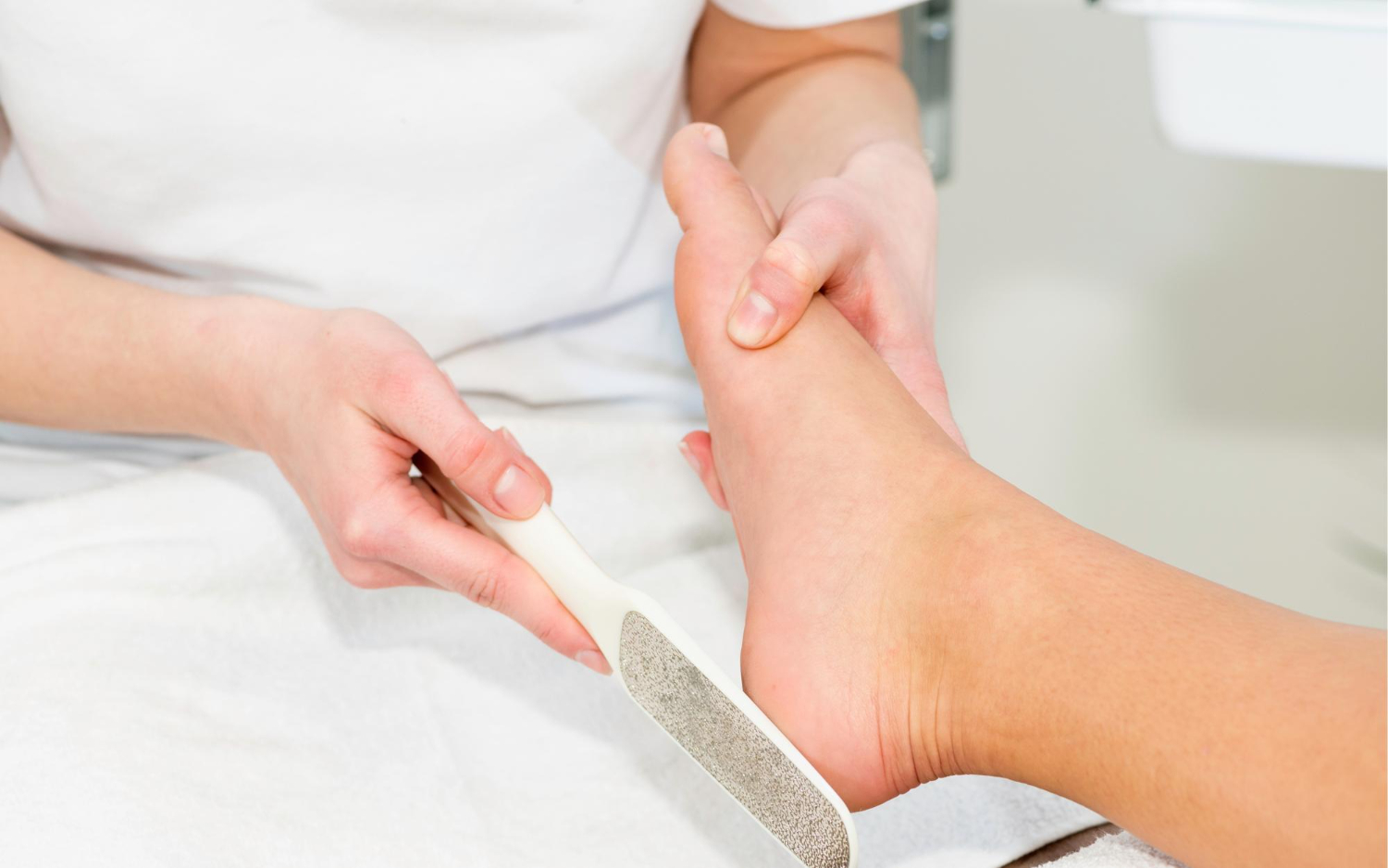
- Gentle exfoliation: a foot file or scrub smooths rough areas. Thick skin is reduced gradually, never cut away.
- Nail care: toenails are trimmed and shaped, and cuticles are tidied gently.
- Massage and moisture: a rich cream is massaged into the heels and feet to leave them feeling soft.
- Polish if you like: a classic or gel finish, depending on what you book.
For a fuller walk-through of each step, read what happens during a pedicure, step by step.
What Should You Do Before Your Appointment?
A little preparation makes the visit more comfortable and helps your technician work gently:
- Moisturise your heels every night for a few days before the visit, so the skin is not at its driest.
- Do not file or cut hard skin yourself just before the appointment.
- Avoid shaving your legs on the same day.
- Tell the team about diabetes, circulation problems, allergies or any open cuts when you book.
- Wear open shoes if you plan to have polish applied.
Our first-visit pedicure preparation checklist covers more tips for a relaxed appointment.
Which Habits Make Cracked Heels Worse?
- Cutting hard skin with blades: this can cause cuts and is best left out of home care entirely.
- Over-filing: removing too much skin at once can leave heels tender.
- Skipping moisturiser: dry skin cracks again quickly without regular care.
- Very long hot soaks: these can strip natural oils from the skin.
- Going barefoot on rough floors: this adds friction and pressure to the heel rim.
How Do You Care for Heels After a Pedicure?
A pedicure can leave heels noticeably smoother, but results depend on what happens between visits. The American Academy of Dermatology recommends habits such as shorter baths, gentle fragrance-free cleansers and applying a thick moisturiser while the skin is still slightly damp.
- Apply a thick cream or balm to your heels every night, and wear cotton socks over it if you can.
- Choose footwear with a closed or supportive back on days when you walk a lot.
- Use a gentle foot file once a week on dry skin, not after a long soak.
- Book a pedicure every four to six weeks if that suits your routine and budget.
For a simple routine, see how to maintain smooth heels between pedicure appointments.
Where Can You Book a Pedicure in Karachi?
My Cure Centre welcomes guests at our Clifton studio (Shop 3, Plot G-21/16, Block 8, open daily 11 am to 11 pm) and our Khayaban-e-Badar studio. Both are on the floor above My Pet Hospital, so you can relax with a pedicure while your pet is seen downstairs. Our instruments are sterile, and our team works gently on dry, sensitive heels.
Frequently Asked Questions
Will one pedicure fix cracked heels?
One pedicure can make dry heels feel smoother and look neater, but it does not permanently stop cracking. Heels often become dry again if they are not moisturised regularly. Combining occasional pedicures with nightly moisturising and supportive footwear usually works better than relying on a single appointment.
Is it safe to get a pedicure if I have diabetes and cracked heels?
Speak to your doctor first. People with diabetes can have reduced sensation or slower healing in the feet, so medical advice comes before any beauty service. If your doctor is comfortable with a pedicure, tell our team when you book so your technician can work extra gently.
Should I file my heels before a pedicure?
No. Filing or cutting hard skin just before your appointment can leave heels tender and make the pedicure less comfortable. Simply moisturise for a few nights beforehand and let your technician smooth the skin gently and gradually during the visit.
How often should I get a pedicure for dry heels?
Many people find a pedicure every four to six weeks works well for dry heels, alongside daily moisturising at home. The right gap depends on how dry your skin gets, the weather and your footwear. If cracks keep returning or become painful, see a doctor.
Can children with dry heels have a pedicure?
Children with mildly dry feet can enjoy our Little Toes Pedicure, which is gentle and child-friendly. If a child has painful, bleeding or infected cracks, please check with a doctor before booking. A parent or guardian should share any allergies or skin sensitivities when making the appointment.
Conclusion
Most people with dry, shallow cracked heels can enjoy a pedicure, and a gentle soak, careful exfoliation and rich moisturiser can leave feet feeling softer and more comfortable. Deep, bleeding, painful or infected cracks, and cracks linked to diabetes or circulation problems, need a doctor first. Between visits, regular moisturising and good footwear make the biggest difference.
Ready to give your heels some gentle care? Book your pedicure appointment at our Clifton or Khayaban-e-Badar studio and let our team help your feet feel comfortable again.